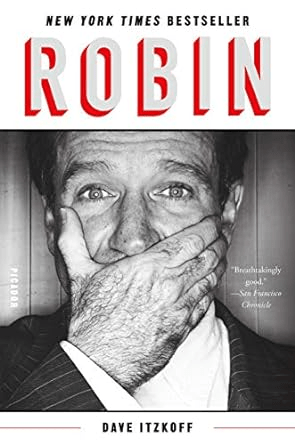
Robin written by Dave Itzkoff is a biography of the powerhouse of a man that was Robin Williams. Like many people my age, I grew up on Robin’s movies. I knew him as The Genie and Mrs. Doubtfire more than a comedian. Learning about his rise in stand-up comedy and his earlier and lesser known movies was such a treat for me. I was also glad to learn about the sources of his suffering. I was finishing high school when the news spread about his suicide. I had recently really started to struggle with my depression and anxiety, so when it was mentioned that he was suffering from depression, I mourned it as another tragic loss from this disease that so many people have grown up simply shrugging their shoulders at. But depression was far from the driving force behind Robin’s death. Learning about the full extent of his physical, mental, and emotional struggles was honestly very depressing, but I’m also very glad I learned about them. When I admire someone that seems so far from my reach, someone with a life I couldn’t even dream up for myself, I desperately want to see and learn about the human instead of the idol. Dave Itzkoff was able to give me a glance at the real Robin through the words of those closest to him which, to me, is a beautiful gift even if it did bring tears to my eyes. Learning about his struggles and weaknesses only made him an even more beloved figure to me. I will always remember him as our captain.
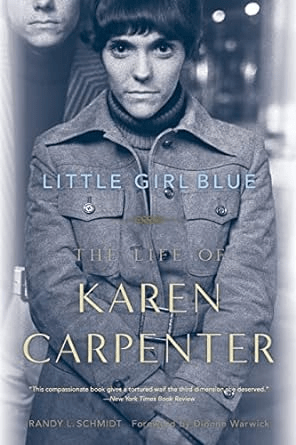
Little Girl Blue written by Randy L. Schmidt shines a light on the life and tragic death of Karen Carpenter. I wasn’t around when the Carpenters were popular. I learned about Karen Carpenter in my high school Psychology class. Our teacher showed us the made for TV movie, The Karen Carpenter Story, to teach us about Anorexia and other eating disorders. After seeing the movie I listened to the Carpenters music and, like many people back in the 70’s, I fell in love with her voice. I’m so glad I found this biography because it rounded her out as a person for me. I heard about her end before I even knew of her work, so even while listening and falling in love with her singing, I had that in the back of my mind. I didn’t know anything else about her. It was really lovely reading about her love of drumming and singing but also about her general love of life and hopes of finding a loving man and becoming a mother. Reading the way her close friends speak about her, it’s clear she made a bigger impression in people’s lives than simple admiration for her talent. She was a loving person, usually a joyful person, who happened to have a very stressful family dynamic that left her very self-conscious. She also lived in a time where mental health was not taken as seriously as it has begun to be recently. Anorexia was only just starting to be discussed as an actual illness someone could have. Not much at all was known about it. It’s devastating how this compulsion led to her premature death and robbed the world of her radiance. She’s someone who should be remembered not for how she left us but for the gifts she left for us.
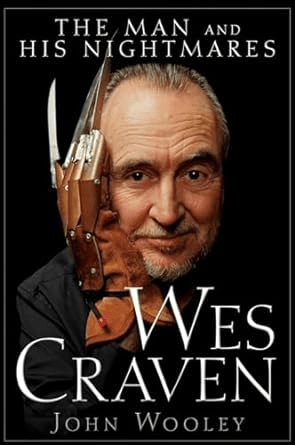
Wes Craven: the man and his nightmares by John Wooley is a fun, informative overlook of Wes Craven’s life and career. It shows him as more than a horror movie director. Wooley focuses on Craven’s artistic abilities and literary knowledge.
Wooley shines a spotlight on the man behind the horrors and the messages he meant to convey. Craven never set out to make horror movies – he had in fact only seen one horror movie before his first release, The Last House on the Left – but he found that the genre was a great vehicle for his thoughts and beliefs on politics, religion, and society. There’s a reason his movies intrigued so many people and boosted the horror genre into a new era. Wes Craven was an artist.
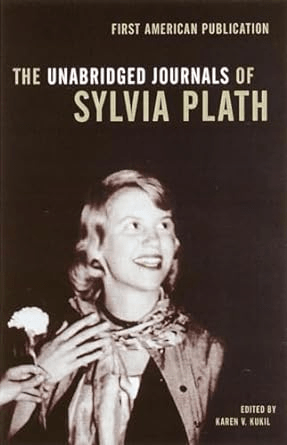
The Unabridged Journals of Sylvia Plath is a collection of journal entries from Sylvia Plath’s journals from 1950-1962. As someone who has struggled with depression for a large part of my life, I sympathized deeply with much of what she wrote. I saw many parallels between her thoughts and mine and even her struggle to create to the ability she knew she could.
It wasn’t the journal entries of her bad days that clenched my heart the hardest though, it was the declarations she wrote on her good days about all the life she has yet to live and all she can accomplish with it that made me stop reading for a few moments to sit with the grief that would come over me. Still, it was beautiful to read about those moments where she felt so full of life and love and joy. Her devastating end does not have to take any brightness away from those moments, and I’m glad they are immortalized.
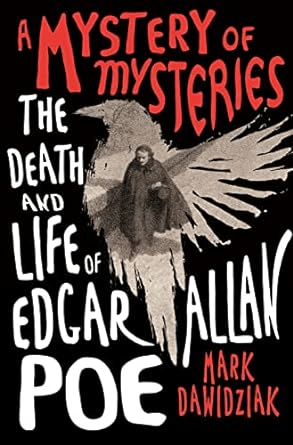
A Mystery of Mysteries by Mark Dawidziak brings Edgar Allan Poe out from under the wing of myth and legend. Dawidziak shows us the true nature of Poe’s life and the extent of his genius. Dawidziak collects the facts from many different experts on Poe’s work and life. He shows us that many of the beliefs we hold as facts about Poe were actually nothing more than slander born of malice from those who looked down on him and wanted to smear his name.
Even though Dawidziak, along with many other scholars and experts, work to disillusion us of this caricature of Poe as a dark, brooding, mysterious man, there are still many mysteries surrounding him and his demise. To close out the book, Dawidziak touches on Poe’s death and mentions the most probable or, in the very least, most intriguing theories of what caused Poe’s death. However, this mystery is likely to remain just that, a conundrum convoluted enough to rival the dramatic, heart-pounding tales Poe is most remembered for by today’s readers.
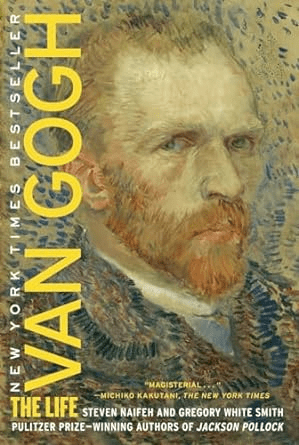
Van Gogh: the life written by Steven Naifeh and Gregory White Smith is a complete overview of the life of Vincent Van Gogh.
I knew only the basics about Vincent Van Gogh: innovative painter, extremely troubled man, mentally ill, chopped off his own ear, supposedly committed suicide. After reading this biography, I was able to see him as a fully-fledged person rather than the sad caricature of an artist that I briefly learned about in school.
What broke my heart as I read through his story was the fact that he was basically a victim of the time period he was born into. Mental illness was either ignored, shunned or, in the cases where an attempt is made to treat it, hushed up by the family so as not to cause a scandal. There were still a large majority that believed mental illness was demonic in nature not biological. I was constantly struck by the thought that Vincent seemed to have borderline personality disorder and/or some form of autism. Later in the book, it is documented that he was diagnosed as emotionally epileptic. These disorders are emotionally taxing on their own but given the amount of stress he was constantly under – from a society that viewed him as a madman, being rejected and ridiculed everywhere he went, struggling to make ends meet no matter how hard he tried – his condition only got worse and worse. Still, the authors of this biography believe Vincent didn’t actually kill himself, though from all the letters Vincent wrote to his brother it’s not too forward to say he was probably relieved when the accident happened. He stated before in his letters that he would never kill himself (as he thought it cowardly and other religious reasons) but that he would not fight it if death suddenly found him. And find him it did.
I’m glad that his work lives on and people finally saw it for the beautiful celebration of life that it is. All he ever wanted was to make something that would last and would touch people deeply. I hope he can somehow see what his work has become.
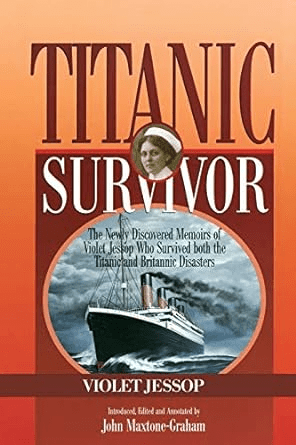
Titanic Survivor by Violet Jessop is the memoir of a woman who worked as a stewardess on the Titanic and other White Star liners.
Violet Jessop lived the most extraordinary, almost confounding, life. Surviving the Titanic is hardly the most surprising event to happen to her. This woman evaded death many times over throughout her lifetime. Those stories alone make this an incredibly intriguing read, but she’s also a fantastic writer which elevates it even higher. Her remembrances are sharp, and her prose is poetic. If you are a fan of adventure novels, this memoir would not disappoint you, and people intrigued by the history of the Titanic will definitely not want to miss out on Jessop’s perspective.
 For All Story Lovers!